
Every business wants more website visitors. Whether those visitors arrive through Google searches, social media campaigns, referrals, advertisements, or direct recommendations, attracting attention online requires considerable effort. Naturally, business owners assume that once visitors reach the website, the hardest part is over. Unfortunately, that is not always the case. Many websites lose potential customers within seconds of their arrival. Visitors land on a page, spend a brief moment evaluating what they see, and then leave without exploring further. No inquiry is submitted, no phone call is made, no product is purchased, and no feedback is provided. The visitor simply disappears. For businesses, this behavior can be both frustrating and confusing. Marketing efforts may continue generating traffic, yet results fail to improve. The website appears functional, information is available, and services are clearly listed. Despite this, customers leave before meaningful engagement ever begins. Understanding why this happens is essential because those first few seconds often determine whether a visitor becomes a customer or a lost opportunity.
Why First Impressions Matter More Than Ever
Today’s consumers make decisions quickly. Before reading detailed service pages or comparing pricing, visitors form immediate opinions based on what they see and experience during their first interaction with a website. These judgments occur almost automatically as visitors assess professionalism, credibility, trustworthiness, ease of use, and overall quality. If the experience feels confusing, outdated, or frustrating, many users decide to leave before exploring further. This behavior is not necessarily intentional; it is simply how modern consumers navigate the digital world. With countless alternatives available online, visitors rarely feel obligated to remain on a website that creates uncertainty or inconvenience.
The Psychology Behind Quick Exits
Online attention spans continue shrinking. Visitors arrive with specific goals and limited patience. They want answers quickly and expect websites to guide them efficiently toward relevant information. When that process becomes difficult, people often choose the fastest solution available—leaving. The challenge for businesses is that these departures rarely come with explanations. Visitors do not announce why they left; they simply move on.
Common Reasons Customers Leave Websites Quickly
Website abandonment is often influenced by multiple factors rather than a single issue. Even small frustrations can combine to create a poor first impression.
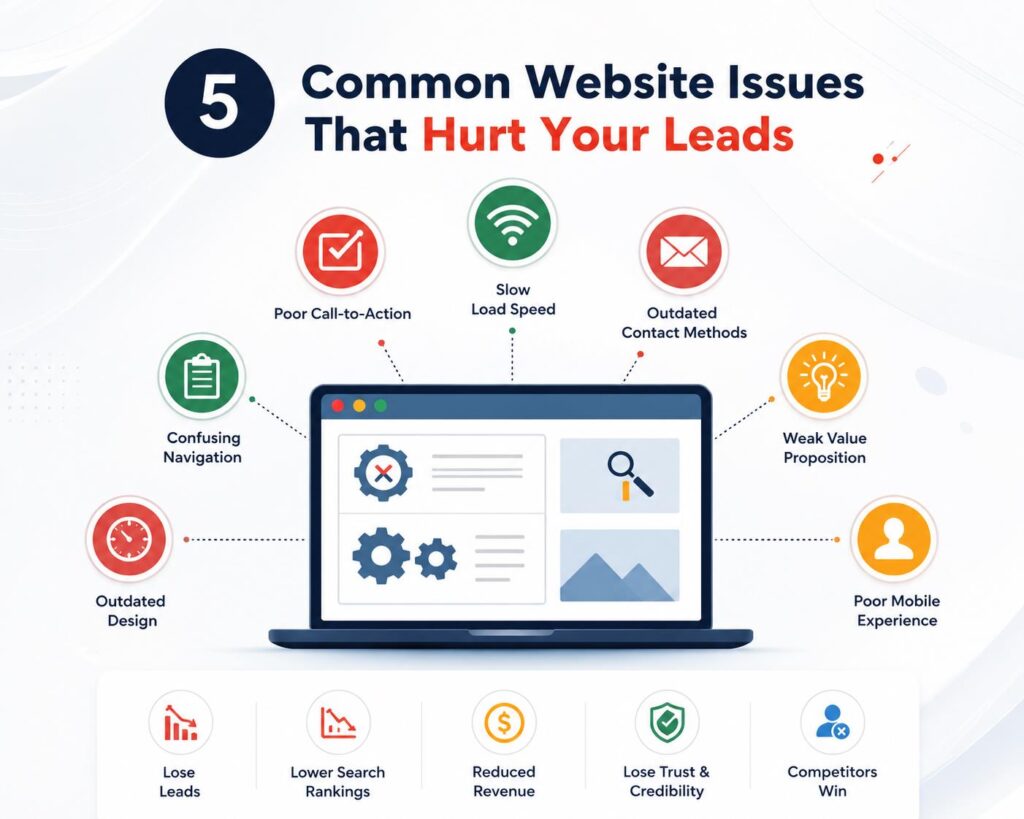
Slow Loading Speeds
Speed remains one of the most important elements of user experience. Modern consumers expect websites to load almost instantly. When pages take too long to appear, visitors often assume the experience will continue being frustrating. As a result, many leave before engaging with any content. This issue becomes particularly significant for mobile users, who may be browsing while multitasking or using slower internet connections.
Outdated Design
Visual appearance influences trust. An outdated design can unintentionally communicate that a business is no longer active, modern, or invested in customer experience. Visitors may question whether information is current or whether the company keeps pace with industry standards. Even businesses with excellent products and services can lose credibility if their website appears neglected.
Confusing Navigation
People visit websites to find answers. When navigation is unclear, menus are overly complicated, or important information is difficult to locate, frustration develops quickly. Visitors should never feel like they are searching for hidden information. The easier it is to find answers, the more likely users are to remain engaged.
Poor Mobile Experience
Mobile devices now account for the majority of online traffic across many industries. Yet some websites continue prioritizing desktop experiences while overlooking mobile usability. Common mobile frustrations include small text, difficult navigation, misaligned content, slow performance, and complicated forms. When mobile users encounter these obstacles, abandonment rates often increase significantly.
Why Trust Influences Website Behavior
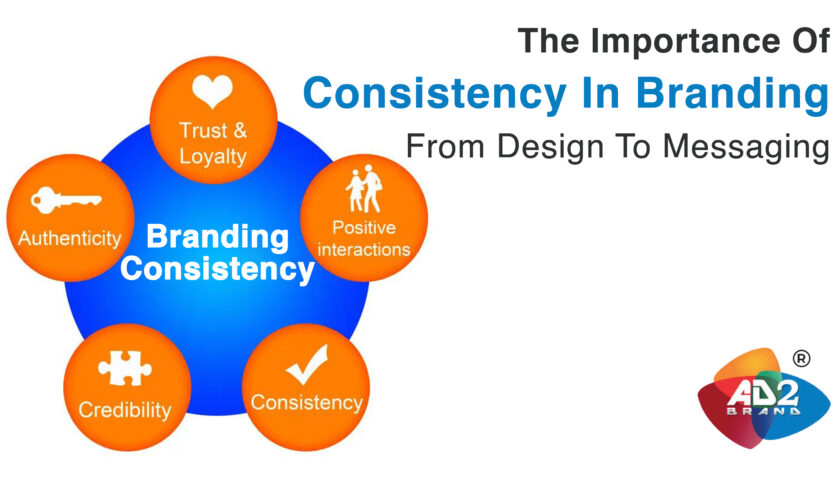
Trust begins forming almost immediately after a visitor arrives. Before contacting a business, customers look for signs that indicate reliability and professionalism. These signals include modern design, updated information, professional branding, secure browsing, clear contact details, and consistent messaging. When trust signals are missing, hesitation increases. Even if visitors are interested in the services being offered, uncertainty may prevent them from taking action.
Small Doubts Create Big Consequences
Trust rarely disappears because of one major issue. More often, it erodes through small concerns. Perhaps the website looks outdated, information appears incomplete, or the user experience feels inconsistent. Individually, these issues may seem minor, but together they create doubt. And doubt often leads visitors to continue searching elsewhere.
The Hidden Cost of High Bounce Rates
Many businesses focus heavily on traffic numbers. More visitors generally seem positive. However, traffic alone does not generate growth. What matters is what visitors do after arriving. A website that attracts traffic but fails to engage users often experiences high bounce rates, meaning visitors leave without exploring multiple pages or taking meaningful action. While high bounce rates may seem like a technical metric, they often represent something much larger—lost opportunities, lost inquiries, lost revenue, and lost customer relationships. Because these customers leave silently, businesses may never realize how many opportunities are being missed.
How Customer Expectations Continue Evolving
Consumer expectations are shaped by the best digital experiences available today. Every interaction with major platforms influences what people expect from every other website they visit. Users have become accustomed to fast loading pages, simple navigation, mobile responsiveness, clear information, and seamless user journeys. As expectations rise, websites that fail to evolve often struggle to maintain engagement. The issue is not always that the website is broken; the issue is that customer expectations have moved forward while the website has remained unchanged.
Warning Signs Businesses Should Not Ignore
Website abandonment often leaves subtle clues. Recognizing these indicators early can help businesses address problems before they affect growth significantly.
Visitors Leave Quickly
Analytics may show users spending very little time on key pages. This often indicates that expectations are not being met.
Low Conversion Rates
Traffic remains steady, but inquiries decline. Visitors arrive yet fail to take meaningful action.
Mobile Performance Concerns
Engagement is significantly lower among mobile users compared to desktop visitors. This may indicate usability challenges.
Reduced Engagement Across Key Pages
Visitors are not exploring services, products, or important content. Lower engagement often suggests that users are losing interest early in the experience.
Why Modern Websites Focus on User Experience
Successful websites today are designed around customer behavior. Rather than functioning as static information sources, they guide visitors through a structured experience. Modern website development prioritizes user experience optimization, mobile-first design, fast performance, clear navigation, trust-building elements, and conversion-focused architecture. The goal is not simply attracting visitors; the goal is helping visitors feel confident enough to take the next step.
Continuous Improvement Creates Better Results
Customer expectations continue changing. Technology evolves rapidly, and competitors constantly improve their online presence. Businesses that regularly evaluate and improve their websites are often better positioned to maintain customer engagement and support long-term growth.
Looking Beyond Traffic Numbers
Many businesses assume traffic is the primary indicator of website success. In reality, engagement often matters more. A smaller number of highly engaged visitors can generate far greater results than large volumes of traffic that leave immediately. Understanding why visitors leave is often more valuable than simply attracting additional traffic. By identifying friction points and improving the user experience, businesses can create stronger customer journeys and increase the likelihood of meaningful engagement.
Thoughtful Support Starts With the Right Conversation
When customers leave a website within seconds, the issue is not always obvious. Sometimes it involves speed, design, navigation, mobile usability, or trust signals. Understanding the reasons behind customer behavior is often the first step toward improving website performance. At Ad2Brand, the focus is on helping businesses evaluate how their websites influence customer engagement, trust, visibility, and conversion performance. Through website development, SEO, digital marketing, and user-focused strategies, organizations can create stronger digital experiences that support long-term business growth.
Contact Ad2Brand
Address: Office Locations: Vishnu Dev Nagar, Pimpri Chinchwad, Pune – 411057 and City Vista, Kharadi, Pune – 411014.
Website: https://ad2brand.com/
Email: ad2brandmedia@gmail.com
Phone: 082084 23935
Sometimes improving business growth begins by understanding why potential customers are leaving before the conversation ever starts.