
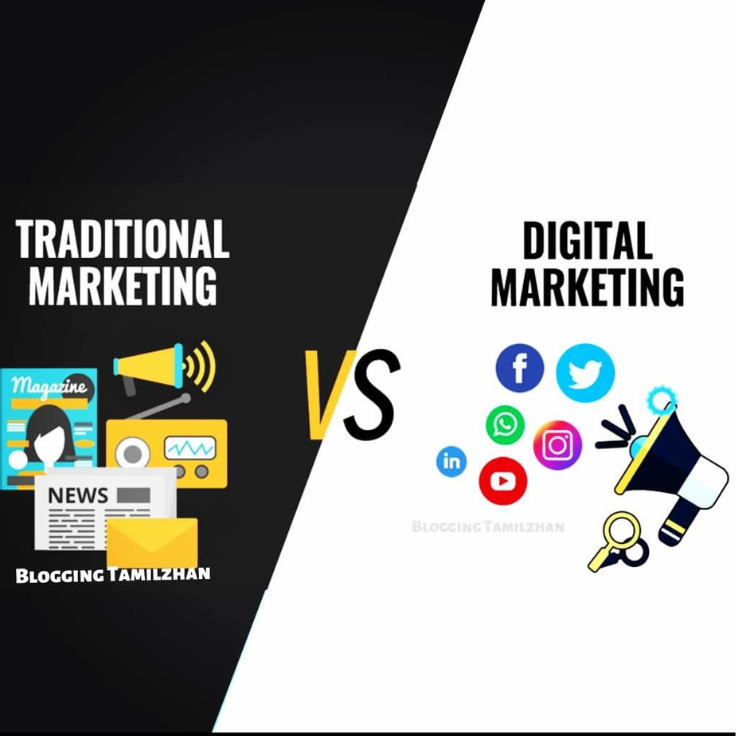
In the changing marketing environment, companies are constantly challenged with the question of what is the best way to reach their target market. Two dominant strategies rule the marketing scene: performance marketing and conventional marketing.. Although both approaches are designed to advertise a brand and drive sales, they vary greatly in their implementation, objectives, and metrics. As digital innovation continues to alter the marketing dynamics, the big question is, what performs best today, traditional marketing or performance marketing?
Comprehending Traditional Marketing
Traditional marketing is the old way of advertising which companies have used for decades. It includes television commercials, print media (newspapers and magazines), radio commercials, billboards, and direct mail Traditional marketing tends to be mass-reach oriented, with the goal of generating wide awareness or a brand or product among a big group of individuals.
One of the hallmarks of traditional marketing is its dependence on long-term campaigns that are less concerned with short-term sales or quantifiable outcomes. Although traditional marketing can be successful at establishing brand awareness and trust, it tends to lack the accuracy and tracking features that contemporary marketers require to optimize campaigns in real-time.
What is Performance Marketing?
Performance marketing is a pay-for-performance technique whereby advertisers compensate for specific actions or outcomes rather than paying beforehand for visibility.. These actions can be clicks, conversions, sign-ups, or purchases.. Performance marketing mostly occurs online, using platforms such as Google Ads, Facebook Ads, affiliate marketing, and influencer collaborations.
The most distinguishing aspect of performance marketing and traditional marketing is that the former is measurement and ROI-driven. In the case of performance marketing, companies pay only upon completion of a specific action, making it an efficient marketing strategy that seamlessly integrates with business objectives. Additionally, performance marketing enables marketers to monitor and optimize campaigns in real-time, guaranteeing that each dollar invested is yielding results.
Cost Efficiency: Performance Marketing vs Traditional Marketing
One of the prominent strengths of performance marketing is that it is cost-effective. Since companies only pay for real conversions (e.g., clicks, leads, or purchases), performance marketing provides them with greater budget control.. It helps businesses prevent wastage of funds on low-performing campaigns, making it a desirable choice, particularly for small-scale businesses with small marketing budgets.
Traditional marketing, however, has a lot of upfront expense, whether one is purchasing advertisement time on TV, radio, or print media. Such expenses are often high and tend not to have the level of specificity required to ensure a quantifiable return on investment (ROI). For instance, an organization can use thousands of dollars to place a billboard, yet it might not be easy to determine how many individuals who observed the billboard ever made a purchase or did any other thing.
Targeting and Personalization
Performance marketing excels in targeting certain groups of people with great accuracy. Employing the latest technology in the form of data analytics, machine learning, and tracking devices, performance marketers are capable of making their campaigns highly targeted to specific people based on certain demographics, behaviors, interests, and locations. This targeted campaign makes it more probable to convert a prospect into a buyer since the ads are highly relevant to the individual.
Traditional marketing, on the other hand, has the tendency to advertise to mass markets. Although one can specify a general demographic (age, gender, location) of TV or radio commercials, there is limited room for hyper-targeting. This implies traditional marketing campaigns may hit many people who don’t care about the product or service being promoted. The conversion rate will therefore typically be lower, and advertising expense may not be as effective.
Measurability and Analytics
One of the greatest assets of performance marketing is the potential to monitor and quantify all areas of the campaign. Marketers are able to see key performance indicators (KPIs) like click-through rates (CTR), conversion rates, customer acquisition costs (CAC), and return on ad spend (ROAS). These real-time metrics enable marketers to make adjustments and optimize campaigns for improved performance, so every dollar spent is working towards the desired end.
Conversely, the level of measurability available in performance marketing is not present in traditional marketing. Although there exist tools such as surveys and focus groups used to measure the effectiveness of TV or print advertising, the information tends to be anecdotal and not as accurate. For instance, finding out how many individuals viewed a specific TV advertisement and made a purchase can be very difficult without using post-campaign research, which can be very time-consuming and expensive.
Flexibility and Quickness
Another aspect where performance marketing has an edge is in its ability to be flexible and quick. Online marketing campaigns can be launched, changed, or suspended at will. If a specific advertisement is not doing well, it can be adjusted, re-targeted, or substituted in a matter of hours, and marketing money is being optimally used.
Traditional marketing, however, is slower and more inflexible. Once a TV or print campaign is underway, it’s hard to make adjustments. If an ad isn’t working for the audience or if the campaign isn’t producing the desired outcome, the only option is to wait for the next chance to make adjustments or start a new campaign, which can be time-consuming and expensive.
Which Strategy Works Better Today?
In today’s highly digital and data-driven world, performance marketing is often the better option for many businesses. Its cost-efficiency, ability to target specific audiences, real-time tracking, and flexibility make it an ideal choice for brands looking to achieve measurable results quickly. Performance marketing allows businesses to scale their efforts without incurring massive upfront costs, which is particularly appealing for startups, small businesses, and e-commerce brands.
That being said, there is still a role for traditional marketing, particularly for building brands and targeting large, diverse groups. For well-known brands with large budgets, traditional marketing can reinforce digital efforts by developing general awareness and trust.
Summary
Performance marketing is a results-driven, cost-effective strategy that focuses on precision targeting, real-time optimization, and measurable outcomes. While traditional marketing remains useful for brand recognition, it lacks the flexibility and measurable results offered by performance marketing. In today’s fast-paced digital landscape, performance marketing aligns more effectively with business goals, particularly in driving immediate sales and conversions, making it an essential tool for modern businesses. For expert performance marketing strategies, trust Ad2brand Digital Marketing Agency in Pune to help optimize your efforts and achieve measurable success.